After repeatedly whining about my foodless posts these days, I finally had something post-able today that doesn`t include my scooter. But as you might already guess from the title, I must warn those of you who are not into eating raw eggs. I`m perfectly aware of how the sight of raw eggs eaten as they are can be quite challenging in some cultures. I myself did not grow up in "raw food" culture, except for some vegetables. First time I saw this raw egg served on a bowl of hot steamed rice called tamago kakegohan in Japanese was on TV during my first year in Japan and I kept saying, "Why? Why? Why???". Years passed by and I still couldn`t make myself have it despite how intriguing it looked to me. It was only recently that I finally challenged myself and later decided that this tamago kakegohan is certainly one of my comfort Japanese food next after (or before??) natto.
So, if you think you are not comfortable with this particular food, then you might be better stop scrolling down your mouse and browse my other recipes instead :)
And for those of you are curious and interested in trying, I need to say these few things loud and clear first.
1. Only eat raw eggs when they are still fresh. As fresh as possible. In Japan, most of the eggs in the stores are stamped with the "use before" date, which usually also indicates the safe period for raw consumption. But please confirm the safety instruction on the pack if you`re not sure. For me, I usually only eat them raw within 3-4 days after I bought them and kept in the fridge. Longer than that, the eggs will be served as cooked dish or baked items.
2. If you are pregnant, sick, or are having problem with your immunity system, don`t eat the eggs raw unless you have consulted with your doctors. I`m not knowledgeable enough to tell you what`s good or bad, but generally speaking, one needs to be extra cautious about the food choice during such conditions.
3. If you live in Japan, it`s very likely that you won`t have any problem with finding "suitable" eggs for raw consumption. But if you don`t and you`re not sure about the food safety, pasteurized eggs seems to be a good option. I found this tips from Rachael of La Fuji Mama (thank you, Rachael!), so you might want to hop over her blog to see her version of tamago kakegohan too.
Now I`m finished with the cautions, are you ready for the adventure?
First thing to do is to stay away from your stove. Instead, go get a bowl of hot steamed rice, make a little well in the center, and crack in a fresh egg.
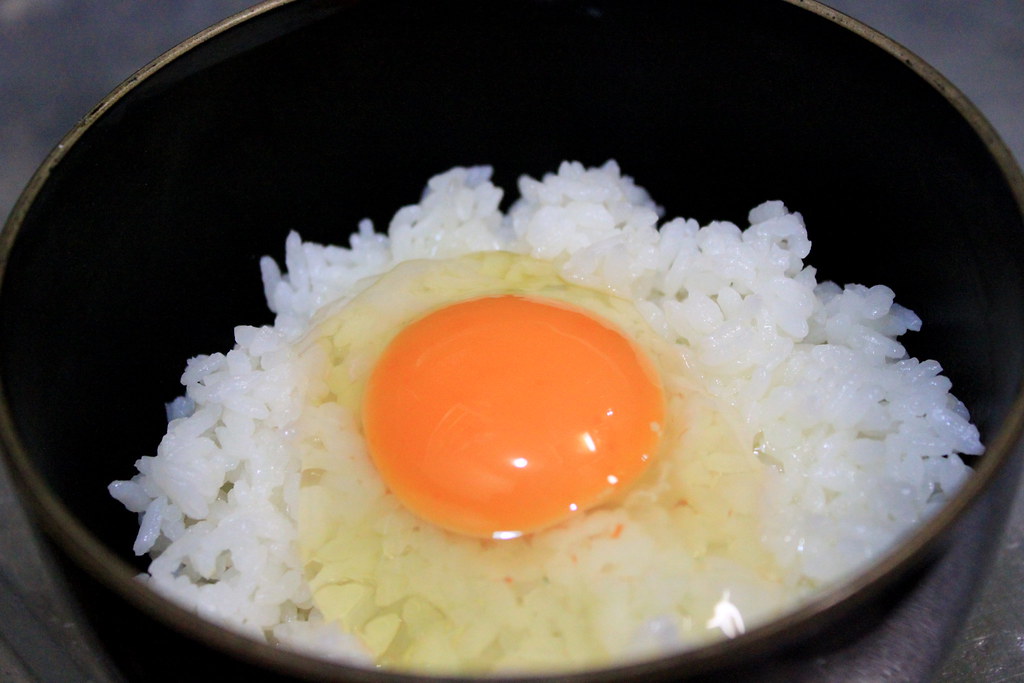 Sometimes I don`t bother to make the well and I just place the egg right on top of the rice.
The simplest way in making tamago kakegohan is probably by drizzling soy sauce or sprinkle salt over.
But I never do that and I don`t know why. I always add something for topping. What I`m showing you here is sesame seeds and dried shrimps. If I had kimchi, I would have added it in too.

Then, I have to add ra-yu, or chili-infused sesame oil. Whatever topping I use, ra-yu is always in it.
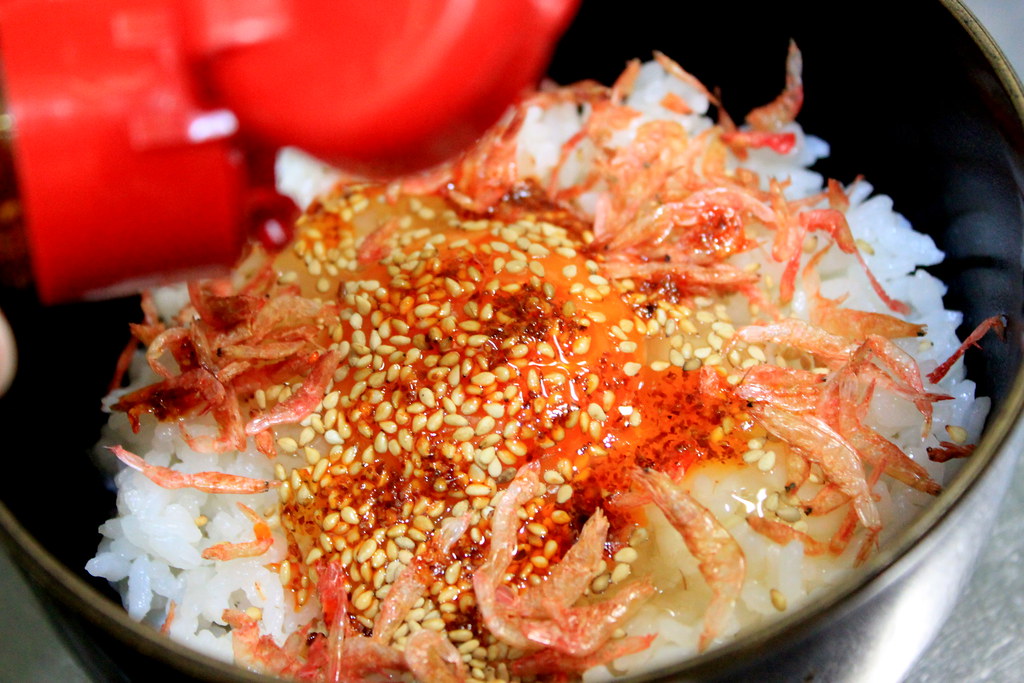 I sprinkle a bit of salt too as this whole set would be quite bland without it. When I want the nuttiness from the sesame seed and sesame oil to stand out, I usually opt for salt rather than soy sauce.
On top of everything, I added shredded nori (seaweed) paper and sprinkled some more sesame seed.
 Done! How long was that? 5 seconds??
Now here`s my most favorite part of the eating ritual.
Dig the chopsticks in to break the egg underneath, stir it in circular movement until the rice is gradually coated by the creamy egg. Then, hold your breath...

...and scoop the eggy rice now...yum yum yum!
 This rich, creamy, and comforting bowl of rice despite of its simplicity is a real no-fuss food, which is also my go-to menu after a hectic or exhausting day. This dish seems to be popular as breakfast menu among Japanese, but I often make this for my express dinner. One thing I feel inside every time I have this bowl of tamago kakegohan in my hands is, "Ah, it`s good to be home".
3. If you live in Japan, it`s very likely that you won`t have any problem with finding "suitable" eggs for raw consumption. But if you don`t and you`re not sure about the food safety, pasteurized eggs seems to be a good option. I found this tips from Rachael of La Fuji Mama (thank you, Rachael!), so you might want to hop over her blog to see her version of tamago kakegohan too.
Now I`m finished with the cautions, are you ready for the adventure?
First thing to do is to stay away from your stove. Instead, go get a bowl of hot steamed rice, make a little well in the center, and crack in a fresh egg.
The simplest way in making tamago kakegohan is probably by drizzling soy sauce or sprinkle salt over.
But I never do that and I don`t know why. I always add something for topping. What I`m showing you here is sesame seeds and dried shrimps. If I had kimchi, I would have added it in too.
Then, I have to add ra-yu, or chili-infused sesame oil. Whatever topping I use, ra-yu is always in it.
On top of everything, I added shredded nori (seaweed) paper and sprinkled some more sesame seed.
Now here`s my most favorite part of the eating ritual.
Dig the chopsticks in to break the egg underneath, stir it in circular movement until the rice is gradually coated by the creamy egg. Then, hold your breath...
...and scoop the eggy rice now...yum yum yum!
Hope your adventure goes well too!
TAMAGO KAKEGOHAN
Serves 1 person
Ingredients:
1 bowl of hot steamed rice
1 fresh whole egg
1 Tbs sesame seeds
1 Tbs dried shrimps
2 tsp Ra-yu (chili-infused sesame oil)
Shredded nori paper
Salt
Method:
1. Prepare a bowl of hot steamed rice (Optional: make a well in the center).
2. Crack a fresh egg in the center or on top of the rice.
3. Sprinkle sesame seeds, dried shrimps, and salt over.
4. Drizzle ra-yu (chili-infused sesame oil)over.
5. Sprinkle shredded nori paper and some more sesame seeds.
Ingredients:
1 bowl of hot steamed rice
1 fresh whole egg
1 Tbs sesame seeds
1 Tbs dried shrimps
2 tsp Ra-yu (chili-infused sesame oil)
Shredded nori paper
Salt
Method:
1. Prepare a bowl of hot steamed rice (Optional: make a well in the center).
2. Crack a fresh egg in the center or on top of the rice.
3. Sprinkle sesame seeds, dried shrimps, and salt over.
4. Drizzle ra-yu (chili-infused sesame oil)over.
5. Sprinkle shredded nori paper and some more sesame seeds.